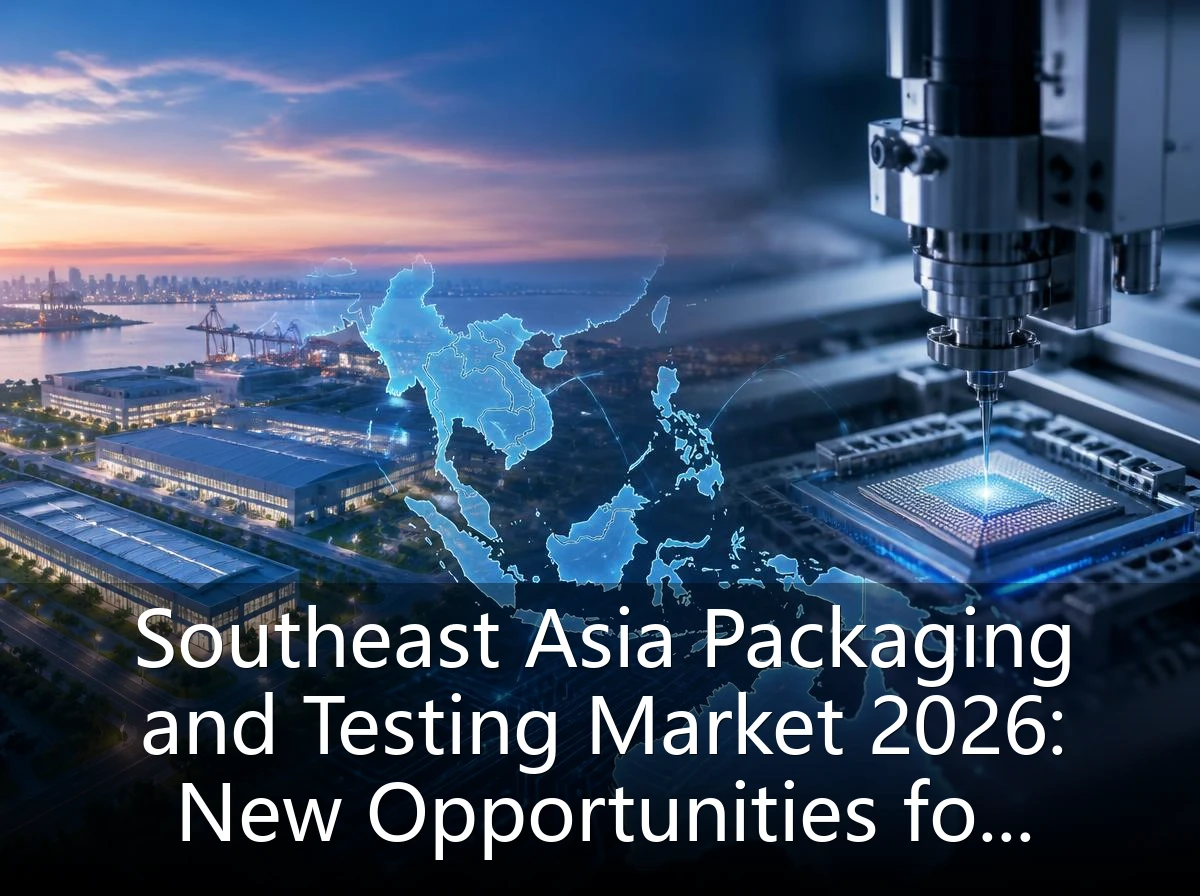
Southeast Asia Packaging and Testing Market Welcomes New AI Era Opportunities
In 2026, the global semiconductor industry landscape is undergoing profound changes, and the explosive growth of artificial intelligence technology has generated strong demand for advanced packaging technologies. Against this backdrop, Southeast Asia is rapidly becoming an important destination for the global transfer of advanced packaging industries, leveraging its unique geographical advantages, policy dividends, and cost advantages. This article will conduct an in-depth analysis of the development opportunities in the Southeast Asia packaging and testing market driven by AI, explore regional policy dividends, corporate layout dynamics, and industrial upgrading paths, and reveal the investment value of US packaging and testing stocks in the restructuring of the Asia-Pacific industrial chain.
Explosive Demand for AI Computing Power Creates Growth Opportunities for Packaging and Testing Market
With the popularization of generative AI applications such as ChatGPT and Midjourney, global demand for AI computing power is showing explosive growth. According to market research data, the global AI chip market size is expected to reach $500 billion in 2026, with a compound annual growth rate exceeding 30%. This trend has directly driven demand for advanced packaging technologies, especially advanced packaging capacity that supports high-bandwidth memory (HBM) and 3D stacking technologies.
As a key link in the semiconductor industry chain, the importance of advanced packaging technology is particularly prominent in the AI era. Compared with traditional packaging technologies, advanced packaging can achieve higher integration, lower power consumption, and better performance, perfectly meeting the dual needs of AI chips for computing power and energy efficiency. Against this backdrop, leading global semiconductor companies are increasing their investment in the advanced packaging field, and Southeast Asia, with its mature electronics manufacturing foundation and relatively low labor costs, is becoming the preferred location for capacity expansion.
Regional Policy Dividends Bring New Opportunities for Southeast Asia Packaging and Testing Industry
Southeast Asian governments have keenly captured this industrial opportunity and successively introduced supportive policies to promote the development of the packaging and testing industry in their countries. Since 2026, countries such as Thailand, Malaysia, and Vietnam have successively launched special funds and tax incentive policies to attract global packaging and testing giants to invest and build factories.
The Thai government announced in March 2026 to invest 5 billion Thai baht (approximately $150 million) to establish a special fund for advanced packaging, focusing on supporting the technology upgrading and capacity expansion of local packaging and testing enterprises. Malaysia has launched the "Semiconductor Strategy 2.0" plan, which plans to invest $10 billion in developing the advanced packaging industry in the next five years, with the goal of making Malaysia a global advanced packaging center. The Vietnamese government also revised the "Semiconductor Industry Development Plan" in the first half of 2026, listing the packaging and testing industry as a key development area and providing a series of preferential policies including land and taxes.
These policy measures not only provide substantial support for packaging and testing enterprises, but also convey to the global market the firm determination of Southeast Asian regions to develop the advanced packaging industry. Driven by policy dividends, the Southeast Asia packaging and testing market is facing unprecedented development opportunities.
US-listed Packaging and Testing Giants Accelerate Southeast Asia Expansion
Facing the growing market potential and policy support in Southeast Asia, leading global packaging and testing enterprises are accelerating their expansion in the region. As important representatives of the US-listed packaging and testing sector, companies such as Amkor Technology and ASE Group have taken the lead, making large-scale investments and building factories in Southeast Asia.
Amkor Technology announced in early 2026 that it will invest $2 billion to build an advanced packaging factory in Vietnam, with expected operation to begin in 2027. The factory will focus on packaging technologies for AI chips and HBM memory, and is expected to bring an average annual revenue growth of 15% for Amkor. ASE Group announced in mid-2026 that it will invest $2 billion to build an advanced packaging R&D center in Malaysia, focusing on developing 2.5D and 3D packaging technologies for AI applications.
In addition to traditional packaging and testing giants, other semiconductor companies in the US stock market are also turning their attention to Southeast Asia. NVIDIA announced in the second quarter of 2026 that it would cooperate with Malaysia's national sovereign fund to invest $1.5 billion to build an advanced packaging factory in Penang to meet the demand for packaging capacity for its AI chips. Samsung Electronics also announced in 2026 that it would add an additional $1 billion investment in Vietnam to expand its packaging and testing capacity, focusing on serving AI and 5G application markets.
The expansion of these companies has not only brought capital and technology to the Southeast Asia packaging and testing market, but has also accelerated the improvement and upgrading of the regional industrial chain, laying a solid foundation for enhancing the position of Southeast Asia in the global semiconductor industry.
Regional Industrial Upgrading: Transition from Traditional to Advanced Packaging
Driven by the demand for AI computing power, the Southeast Asia packaging and testing market is undergoing a transformation and upgrading from traditional packaging to advanced packaging. This transformation is not only reflected in the technological level but also in the construction of the industrial ecosystem.
At the technological level, Southeast Asian packaging and testing enterprises are actively introducing and developing advanced packaging technologies. Companies such as Unisem in Malaysia and STATS ChipPAC in Singapore have begun mass production of 2.5D packaging technology and are actively deploying 3D packaging technology. Packaging and testing enterprises in Vietnam are accelerating technology introduction and absorption through cooperation with international giants such as TSMC and ASE Group.
In terms of the industrial ecosystem, Southeast Asian countries are striving to build a complete advanced packaging industry chain. Taking Malaysia as an example, the government has attracted a number of semiconductor materials, equipment, and design enterprises to settle, forming a complete industrial ecosystem from design to packaging. Singapore, leveraging its R&D advantages, focuses on developing high-end packaging technology R&D and talent cultivation, creating a regional innovation center.
This industrial upgrading has not only improved the technical level and competitiveness of Southeast Asian packaging and testing enterprises, but has also injected new growth momentum into the regional economy. According to industry analysis, by 2028, the output value of advanced packaging in Southeast Asia is expected to reach 25% of the global total, becoming an important pole in the global advanced packaging industry.
Investment Value Analysis: Southeast Asia Opportunities for US-listed Packaging and Testing Sector
From an investment perspective, the rise of the Southeast Asia packaging and testing market has brought new growth opportunities for the US-listed packaging and testing sector. Investors can grasp this trend from the following dimensions:
- Leading Enterprise Layout: Focus on packaging and testing giants that have already invested heavily in Southeast Asia, such as Amkor Technology and ASE Group. These companies are expected to occupy a dominant position in the Southeast Asian market by virtue of their first-mover advantages and scale effects.
- Technology-leading Enterprises: Focus on enterprises with leading advantages in the field of advanced packaging technology, especially those with technology reserves in key AI fields such as HBM packaging and 3D stacking.
- Regional Policy Beneficiary Enterprises: Focus on enterprises with layouts in major Southeast Asian investment countries (such as Malaysia, Vietnam, Thailand), which will directly benefit from regional policy dividends.
- Industry Chain Supporting Enterprises: Focus on supporting enterprises that provide materials, equipment, and services to packaging and testing enterprises, which will benefit from the expansion of the packaging and testing industry.
However, investors also need to pay attention to related risks. First, the infrastructure and talent reserve in Southeast Asia still lag behind developed countries, which may affect the implementation progress of projects. Secondly, geopolitical factors may have uncertain impacts on the industrial chain layout. In addition, the cyclical fluctuations of the global semiconductor industry may also have short-term impacts on the performance of packaging and testing enterprises.
Future Outlook: Long-term Value of Southeast Asia Packaging and Testing Market
Looking ahead, driven by the demand for AI computing power, the Southeast Asia packaging and testing market is expected to maintain a long-term growth trend. With continuous technological advancement and continuous improvement of the industrial chain, Southeast Asia is expected to become one of the important centers of the global advanced packaging industry.
In the long run, the development of the Southeast Asia packaging and testing market will benefit from the following factors: first, the general trend of the global semiconductor industry shifting to Asia; second, the growth of computing power demand brought by the continuous development of AI technology; third, the continuous strengthening of policy support from regional countries; fourth, the deep layout of global packaging and testing enterprises in Southeast Asia.
For the US-listed packaging and testing sector, the rise of the Southeast Asian market not only provides new growth space but also helps enterprises diversify regional risks. Through diversified layouts in Southeast Asia, packaging and testing enterprises can better cope with fluctuations in the global market and achieve sustainable development.
In conclusion, the capacity expansion and industrial upgrading of the Southeast Asia packaging and testing market driven by AI have brought new investment opportunities for the US-listed packaging and testing sector. Investors should pay close attention to regional policy dynamics, corporate layout progress, and technological development trends, and grasp the investment opportunities in this industrial transformation.